
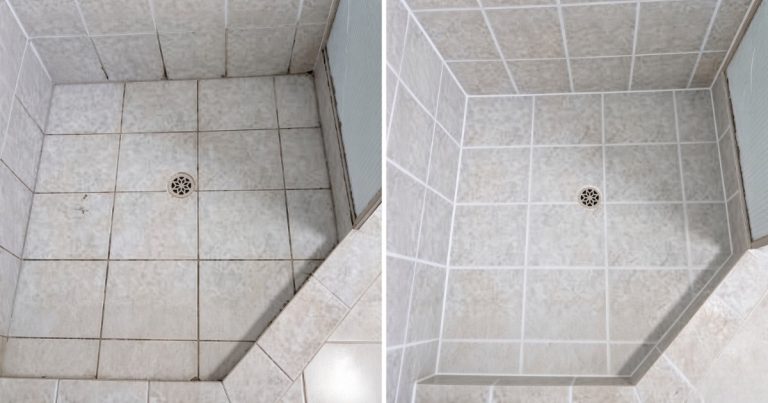
A damaged tile does not always mean you need to replace your entire bathroom.
Cracked, chipped, loose or stained tiles can make a bathroom look tired, but the best solution depends on the type and extent of the damage. In some cases, tile repair is enough. In others, regrouting, sealing or replacing individual tiles may provide a better result.
The Grout Crew provides tile repair, regrouting, sealing, leak repairs and tile restoration services. Its process starts with an inspection so the condition of the tiles and grout can be assessed before work begins.
Before you start removing tiles, it is worth finding out whether the existing surface can be restored.
What Is the Difference Between Tile Repair, Regrouting and Replacement?
Each option addresses a different type of bathroom problem.
Tile Repair
Tile repair focuses on localised damage to the tile itself.
If one or two tiles are chipped, cracked or damaged while the surrounding tiles remain in good condition, targeted tile repair or individual replacement may be more practical than removing a whole section.
The Grout Crew offers tile repair services for damaged tiles and also provides tile replacement and regrouting where required.
Regrouting
Regrouting deals with the material between the tiles rather than the tile surface.
If your tiles still look good but the grout has cracked, crumbled, stained or deteriorated, regrouting bathroom surfaces may be all that is required.
For a more durable option in suitable applications, The Grout Crew offers epoxy regrouting.
Tile Replacement
Replacement makes sense when the tile itself is too damaged to restore.
A badly broken, loose or extensively cracked tile may need to be removed and replaced. However, that does not automatically mean every tile in the bathroom needs to go.
10 Signs You Need Tile Repair, Regrouting or Replacement
These ten signs can help you identify the most suitable solution for your bathroom.
1. You Have One Cracked Bathroom Tile
A single cracked tile is rarely a reason to start a complete renovation.
A hairline crack or small area of damage may be suitable for cracked tile repair or individual replacement, depending on the tile and the cause of the damage.
First, check whether the surrounding tiles are stable and whether there are any signs of moisture or movement.
Best option: Tile repair or individual tile replacement.
2. Several Tiles Are Cracked
Multiple damaged tiles need a closer inspection before you decide to replace them.
Several cracks may result from impact, movement, installation problems or issues with the surface beneath the tiles.
If the damage is limited, damaged tile repair may still be possible. However, widespread cracking may make partial or full replacement more appropriate.
Best option: Professional assessment followed by repair or replacement.
3. Your Grout Is Cracked, Missing or Crumbling
When the tiles are sound but the joints have deteriorated, replacing the tiles may be unnecessary.
Cracked or missing grout can affect the appearance of your bathroom and may leave vulnerable joints exposed to moisture.
Professional epoxy regrouting can provide an alternative to replacing otherwise usable tiles.
The Grout Crew offers epoxy regrouting as a durable, stain-resistant option for suitable tiled surfaces.
Best option: Regrouting or epoxy regrouting.
4. Your Grout Is Dirty but Not Damaged
Stained grout does not automatically mean the grout needs to be removed.
Soap residue, dirt and everyday bathroom buildup can make grout look old even when it remains structurally sound.
The Grout Crew offers grout and tile deep cleaning as part of its restoration services. Its wider service range includes deep cleaning, grout colour sealing and tile restoration.
If cleaning does not deliver the desired result, grout sealing or regrouting can be considered.
Best option: Deep cleaning first, followed by sealing or regrouting if needed.
5. A Shower Tile Feels Loose
A loose tile should not be ignored, especially inside a wet area.
If a tile moves when pressed, the surrounding grout may also become damaged. Moisture can then become a bigger concern if joints or seals are compromised.
The Grout Crew provides shower tile repair alongside other shower and tile restoration services.
If you also notice dampness, staining or a recurring leak, investigate the source before carrying out cosmetic repairs.
Best option: Professional tile assessment and repair or replacement.
6. Cracked Tiles Are Combined With Water Damage
Cracks become more concerning when you also notice signs of moisture.
Look for water staining, mould, damp areas, swollen materials or moisture outside the immediate shower area.
New Zealand Building Performance guidance explains that shower penetrations need appropriate waterproofing to help prevent water from reaching concealed building elements.
You can read the NZ Government guidance on well-sealed shower penetrations before deciding whether a simple repair is appropriate.
Best option: Investigate the moisture source first, then repair or replace affected tiles.
7. The Tiles Look Good but the Grout Has Failed
Good tiles with damaged grout are often an excellent restoration opportunity.
If the tile faces remain intact but the joints are cracked, stained or missing, professional regrouting bathroom surfaces can refresh the appearance without removing the existing tiles.
The Grout Crew’s restoration process includes inspection, deep cleaning and restoration, followed by sealing and protection where appropriate.
Best option: Regrouting or epoxy regrouting.
8. Your Shower Silicone Is Cracked or Mouldy
Sometimes the tile is perfectly fine and the silicone is the real problem.
Check the corners, shower base and joints where different surfaces meet. Cracked, peeling or mouldy silicone may need to be removed and replaced.
The Grout Crew provides tile sealing and re-silicone services to address worn silicone and help protect tiled surfaces.
Best option: Re-silicone and sealing where appropriate.
9. A Large Number of Tiles Are Damaged
Extensive damage can make tile replacement more practical than repairing individual tiles.
If many tiles are broken, loose or severely damaged, repeatedly repairing small areas may not provide the best long-term result.
Partial or complete tile replacement may be more suitable, particularly if the underlying surface also requires attention.
Best option: Partial or full replacement after professional assessment.
10. Your Bathroom Looks Old but the Tiles Are Still Sound
A dated bathroom does not always need a complete re-tile.
If the main problems are dirty grout, dull tiles, minor chips, worn silicone or surface stains, tile restoration NZ services may provide a practical alternative.
The Grout Crew’s services include tile repair, deep cleaning, regrouting, sealing and surface restoration.
Best option: Tile restoration, cleaning, regrouting or sealing.
Tile Repair vs Regrouting: Which One Should You Choose?
The simplest way to decide is to identify exactly what is damaged.
| Bathroom problem | Possible solution |
|---|---|
| One chipped tile | Tile repair or replacement |
| One cracked tile | Cracked tile repair or replacement |
| Several loose tiles | Professional inspection |
| Cracked grout | Regrouting |
| Stained grout | Deep cleaning or colour sealing |
| Mouldy grout | Cleaning and possible regrouting |
| Worn silicone | Re-silicone |
| Widespread tile damage | Tile replacement |
| Dull but sound tiles | Tile restoration |
| Suspected shower leak | Leak assessment and repair |
The goal should always be to repair what can be repaired and replace what genuinely needs replacing.
When Is Tile Repair Better Than Tile Replacement?
Targeted repair can make sense when the damage is limited.
You may be able to choose tile repair when:
- Only one or a few tiles are affected
- The damage is localised
- Surrounding tiles are stable
- The grout is generally sound
- There are no signs of major water damage
- The existing tiles are difficult to match
- You want to minimise renovation disruption
A professional assessment can help determine whether repair or individual replacement is practical.
The Grout Crew specifically lists tile repair for damaged tiles as one of its core services.
When Is Regrouting Bathroom Surfaces the Better Choice?
If the tiles are still in good condition, failed grout may be the only thing that needs attention.
Regrouting can improve the appearance of a bathroom while addressing cracked, missing or deteriorated joints.
This can be particularly useful when you want to refresh your bathroom without removing the existing tile layout.
For suitable applications, epoxy regrouting can provide a durable and stain-resistant alternative.
However, grout should not be confused with the waterproofing system behind a tiled shower.
New Zealand Building Code guidance addresses internal moisture and requirements relating to shower areas, including appropriate moisture management and waterproofing.
When Should You Choose Tile Replacement?
Replacement becomes the better option when the existing tile cannot be reliably restored.
Consider tile replacement when:
- Tiles are badly broken
- Cracks are widespread
- Multiple tiles are loose
- The tile surface has severe damage
- The existing tiles are unsuitable
- You are changing the bathroom layout
- The substrate needs significant work
- Individual matching tiles cannot reasonably be sourced
Replacing one or several damaged tiles can still be very different from completely re-tiling a bathroom.
Does Cracked Tile Repair Fix the Underlying Problem?
Repairing a visible crack does not always address why the tile cracked.
Tiles can crack because of impact, movement, installation problems or issues with the substrate.
If the same area repeatedly develops cracks, the cause should be investigated before carrying out another repair.
This matters even more in showers because moisture must be properly controlled behind the visible tile surface. Building Performance explains that shower penetrations need effective waterproofing to prevent water damage to concealed building elements.
So, cracked tile repair should focus on more than simply making the crack disappear when there are signs of a wider problem.
Why Waterproofing Matters With Shower Tile Repair
A shower tile is only one part of the wet-area system.
Tiled showers need appropriate waterproofing behind the visible finishes. If moisture is getting behind the tiled system, replacing a cracked tile alone may not solve the underlying issue.
The NZ Government’s Building Performance guidance states that shower penetrations should be waterproofed to help prevent water damage.
For more information, read the official E3 Internal Moisture guidance from Building Performance.
If you notice persistent dampness, water staining or mould alongside damaged tiles, investigate the moisture issue before choosing between repair and replacement.
Epoxy Regrouting vs Traditional Grout
Epoxy regrouting can be worth considering when durability and stain resistance are priorities.
Traditional grout can become stained, cracked or discoloured over time. Epoxy grout provides another option for suitable tiled areas.
The Grout Crew offers epoxy regrouting as part of its tile and grout restoration services.
It is important to choose a grout system suitable for the particular application and existing surface.
Tile Restoration NZ: Can You Avoid a Full Re-Tile?
Restoration can give an older bathroom a fresh appearance without automatically replacing every tile.
A combination of professional cleaning, grout restoration, tile repair, sealing and re-silicone work can make a significant difference when the existing tiles remain structurally sound.
The Grout Crew provides a range of tile and grout restoration services covering deep cleaning, regrouting, tile sealing, tile repair and other restoration solutions.
This makes tile restoration NZ a practical option for homeowners who want to improve an existing bathroom while avoiding unnecessary demolition.
5 Questions to Ask Before You Replace Your Bathroom Tiles
A quick assessment can prevent unnecessary replacement work.
1. Are the tiles structurally sound?
Stable tiles may not need replacement.
Check for movement, widespread cracking and other signs of damage.
2. Is the problem actually the grout?
Good tiles with failing grout may only need regrouting.
Look closely at the joints before deciding to replace the tiles.
3. Is there evidence of moisture damage?
Moisture changes the repair decision.
Persistent dampness, mould or staining should be investigated before cosmetic work.
4. Can the damaged tile be repaired or individually replaced?
One damaged tile rarely means you need a complete re-tile.
Targeted tile repair or individual replacement may be enough.
5. Would restoration give you the result you want?
Cleaning, sealing and regrouting can transform tired-looking tiles.
Consider restoration before committing to a full renovation.
How The Grout Crew Approaches Tile Repair
A good repair starts with understanding the existing surface.
The Grout Crew says its tile restoration process starts with an inspection and quote, followed by deep cleaning and restoration and then sealing and protection where appropriate.
Its tile repair service can address damaged tiles, while epoxy regrouting provides an option when the grout is the main concern.
For worn joints, tile sealing and re-silicone can help refresh areas around showers and other wet zones.
The company also provides grout and tile deep cleaning and mould cleaning as part of its wider tile-care services.
Repair, Regrout or Replace? The Simple Answer
Start with the smallest solution that properly fixes the problem.
If one tile is cracked, investigate tile repair or individual replacement.
If the tiles are good but the grout is failing, consider regrouting bathroom surfaces.
If silicone has deteriorated, consider re-silicone work.
If tiles are extensively damaged, tile replacement may be more appropriate.
And if your bathroom simply looks tired, tile restoration NZ services may refresh the space without a complete renovation.
The right answer depends on the condition of the entire tiled surface, not just one visible crack.
Final Thoughts: Repair Before You Replace
Damaged bathroom tiles do not always mean you need a new bathroom.
Choosing between tile repair, regrouting and tile replacement starts with identifying the actual problem.
A cracked tile may need a targeted repair. Failed grout may need regrouting. Worn silicone may need replacement. Extensive tile damage may require a larger replacement project.
The Grout Crew provides tile repair, regrouting, epoxy regrouting, sealing and restoration services to address different types of tiled-surface problems.
Before you start removing perfectly usable tiles, get the existing surface assessed. You may find that a targeted restoration gives your bathroom the clean, refreshed finish you want without the disruption of a complete re-tile.
Need Professional Tile Repair?
Do not let a cracked, chipped or loose tile become a bigger bathroom problem.
The Grout Crew provides professional tile repair, bathroom tile repair, cracked tile repair, regrouting, epoxy regrouting, tile sealing and tile restoration services.
Not sure whether you should repair, regrout or replace? Start with an assessment of the existing tiled surface.
👉 Request a free quote from The Grout Crew and find out which solution is right for your bathroom.
Call The Grout Crew on 0800 00 0905 to discuss your tile repair or restoration needs.