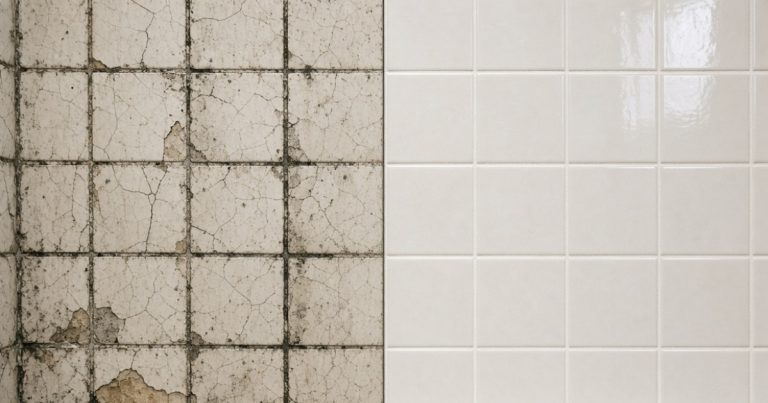
Before you remove your old tiles, check whether they can be restored.
A tired bathroom does not always need a complete renovation. Stained grout, dull tiles, mould, damaged joints and worn silicone can make an otherwise sound bathroom look old. In many cases, bathroom tile restoration can refresh the space without the mess, time and disruption of removing every tile.
The Grout Crew specialises in tile restoration, deep cleaning, regrouting, tile repair and sealing. Its restoration process starts by assessing the existing tiles and grout before recommending the most suitable treatment.
If your tiles are still in reasonable condition, restoration may give your bathroom a fresh look without a full re-tile.
What Is Bathroom Tile Restoration?
Bathroom tile restoration focuses on improving and repairing existing tiled surfaces instead of automatically replacing them.
The process can include deep tile and grout cleaning, grout restoration, colour sealing, regrouting, tile repair, silicone replacement and surface sealing. The right combination depends on the condition of your bathroom.
The Grout Crew follows a three-step restoration process: inspection and quote, deep cleaning and restoration, followed by sealing and protection where appropriate.
This makes bathroom tile restoration NZ homeowners a practical option when the underlying tiles remain usable but the surface has lost its original appearance.
5 Signs Your Bathroom May Need Tile Restoration
A few simple warning signs can tell you when your bathroom needs attention.
1. Your Grout Has Changed Colour
Discoloured grout can make clean tiles look old and neglected.
Grout collects soap residue, dirt, moisture and everyday bathroom buildup. Over time, white or light grout can become grey, yellow or dark.
Professional grout and tile deep cleaning can remove stubborn buildup and help restore the appearance of the tiled surface. The Grout Crew uses professional tools and cleaning methods to target embedded dirt, stains and buildup.
If cleaning alone does not restore the original appearance, grout colour sealing or regrouting may provide a more suitable solution.
2. Your Tiles Look Dull
Dull tiles do not always mean that the tiles themselves need replacing.
Regular exposure to soap, water and cleaning products can leave residue on tile surfaces. Over time, this buildup can make even good-quality tiles appear tired.
If the tiles remain structurally sound, tile restoration may be a better first step than replacing them.
Professional cleaning can remove accumulated dirt and residue, while sealing can help protect suitable surfaces from future staining and everyday wear. The Grout Crew says its restoration service is designed to restore the appearance and longevity of tiled surfaces.
3. Your Grout Is Cracked or Missing
Damaged grout needs attention before the problem spreads across the tiled surface.
Cracked, loose or missing grout can affect the appearance of your bathroom and may allow moisture to reach areas that should remain protected.
Depending on the condition, professional regrouting may restore the joints without removing the existing tiles.
For a more durable option in suitable applications, The Grout Crew provides epoxy regrouting. Its epoxy grout service is promoted as a durable and stain-resistant solution that can resist water, stains and mould better than traditional grout.
Addressing damaged grout early can also help prevent further deterioration and unnecessary tile replacement.
4. Your Shower Has Mouldy Joints
Recurring mould around grout and silicone is a sign that your shower needs more than a quick clean.
Bathrooms naturally deal with high levels of moisture. However, mould that repeatedly appears around shower joints can make the bathroom look dirty even after regular cleaning.
The Grout Crew provides mould cleaning and removal as part of its tile and bathroom restoration services.
If mould keeps returning, it is worth looking beyond the visible surface. Damaged grout, deteriorating silicone, poor ventilation or ongoing moisture can all contribute to recurring bathroom mould.
5. Your Silicone Is Worn or Peeling
Old silicone can spoil the appearance of a bathroom and leave joints vulnerable to moisture.
Check the corners of your shower, around the shower base and where different surfaces meet. Cracked, peeling, shrinking or mouldy silicone may need replacement.
The Grout Crew provides tile sealing and re-silicone services to refresh worn joints and provide additional protection.
Replacing deteriorated silicone can form an important part of tile and grout restoration, particularly around wet areas that receive regular water exposure.
Bathroom Tile Restoration vs Full Re-Tiling
The condition of your existing tiles should guide your renovation decision.
Full re-tiling may be appropriate when tiles are extensively damaged, the layout needs to change or there are underlying building or waterproofing problems that require more extensive work.
However, bathroom tile restoration can make sense when:
- Most tiles are still in good condition
- Grout is stained or deteriorated
- Some tiles need minor repairs
- Silicone has become worn
- The bathroom looks dated but remains functional
- You want to avoid unnecessary demolition
- You are looking for practical bathroom renovation alternatives
The key is to assess the existing surface before deciding that everything needs to come out.
Can You Restore Old Bathroom Tiles?
Yes, many old tiled surfaces can be refreshed when the underlying tiles remain suitable.
The right restoration method depends on the tile material, condition, grout, level of staining and moisture exposure.
A professional assessment can identify whether the bathroom needs cleaning, regrouting, sealing, tile repair or a combination of treatments.
The Grout Crew starts its restoration process with an inspection and quote so problem areas can be identified before work begins.
That approach is particularly useful for homeowners who want to restore old bathroom tiles without committing to a complete bathroom renovation.
Bathroom Tile Restoration and Waterproofing: What Homeowners Should Know
Restoration can improve the visible surface, but it should not be confused with repairing hidden waterproofing problems.
This distinction matters particularly in tiled showers. Proper waterproofing beneath and around a tiled shower is important because water can reach concealed building elements when vulnerable areas are not adequately protected.
New Zealand’s Building Performance guidance explains the importance of well-sealed shower penetrations in helping prevent water damage. Read the MBIE Building Performance guidance on well-sealed shower penetrations.
BRANZ’s Building CodeHub also provides technical information on waterproofing tiled showers, highlighting the importance of appropriate waterproofing in tiled shower construction.
So, if you notice water damage, persistent leaks or signs of moisture behind the tiled area, do not assume that cleaning or regrouting alone will solve the problem.
How The Grout Crew Restores Tired Tiles
Professional restoration starts with finding out what your tiles actually need.
The Grout Crew’s restoration process begins with an inspection and quote. The team then carries out deep cleaning and restoration before applying sealing and protection where appropriate.
Depending on the condition of your bathroom, restoration may include:
- Grout and tile deep cleaning
- Grout colour sealing
- Epoxy regrouting
- Bathroom tile repair
- Tile sealing
- Re-silicone
- Mould cleaning and removal
- Shower glass restoration
- Leaky shower repair
For example, cracked, chipped or loose tiles may be suitable for professional tile repair, while heavily stained surfaces may benefit from deep grout and tile cleaning.
Explore The Grout Crew’s complete range of tile and grout services to find the restoration option that best matches your bathroom.
Why Bathroom Tile Restoration Can Be a Better Renovation Alternative
Restoration can give you a cleaner and fresher bathroom while keeping more of the existing space intact.
A full bathroom renovation can involve demolition, waste removal, new tiles, adhesives, grout, labour and considerable disruption. If the existing tiles are still suitable, restoration may offer a simpler alternative.
With bathroom tile restoration, you can focus your budget on the areas that actually need attention.
For example, you may not need to replace every tile if the main issues are:
- Dirty grout
- Faded grout
- Surface stains
- Mould
- Minor tile damage
- Worn silicone
- Loss of surface protection
Instead, targeted restoration can address these problems while keeping the existing tiled layout.
The Grout Crew describes its tile restoration service as a way to restore tiled surfaces while helping extend their life and avoid unnecessary early replacement.
Tile and Grout Restoration: What Can Be Improved?
A professional restoration can tackle several common signs of bathroom wear at the same time.
Grout
Clean and well-maintained grout can make the entire bathroom look fresher.
Deep cleaning, colour sealing or regrouting can improve stained, cracked or deteriorated grout.
Tiles
Existing tiles may only need a professional clean or targeted repair.
Deep cleaning and bathroom tile repair can improve suitable existing surfaces without requiring complete replacement.
Silicone
Fresh silicone can improve both appearance and protection around wet-area joints.
Replacing worn silicone can help refresh shower corners and other joints where surfaces meet.
Sealing
Sealing can help protect suitable surfaces from future stains, moisture and everyday wear.
The Grout Crew includes sealing and protection as the final stage of its restoration process where appropriate.
Shower Areas
A tired shower can often benefit from several restoration treatments working together.
Shower tile restoration may combine cleaning, regrouting, sealing, tile repair and silicone replacement, depending on the condition of the area.
When Should You Choose Full Re-Tiling Instead?
Restoration is not the right solution for every bathroom.
You may need more extensive renovation work when:
- Large sections of tile are damaged
- Tiles are loose across a wide area
- The bathroom layout needs to change
- The substrate has serious problems
- There are significant waterproofing concerns
- The existing tiles are unsuitable for the intended use
- Extensive water damage has affected concealed building elements
In these situations, replacing the tiled system may be more appropriate than simply restoring the surface.
For tiled shower areas, proper waterproofing remains particularly important. If you suspect a concealed moisture problem, professional assessment should come before deciding on a cosmetic restoration.
How to Maintain Restored Bathroom Tiles
A little regular care can help your restored bathroom stay cleaner for longer.
Keep Surfaces Dry
Reducing standing moisture can help limit mould and buildup.
Use your bathroom ventilation and allow wet surfaces to dry after showering.
Clean Grout Regularly
Regular cleaning prevents dirt and soap residue from building up.
Use products suitable for your particular tile and grout.
Check Silicone
Small gaps or cracks in silicone should not be ignored.
Check shower corners and joints regularly and arrange replacement when the silicone starts deteriorating.
Deal With Damage Early
Small problems are easier to manage than widespread deterioration.
If you notice cracked grout, loose tiles or recurring mould, have the area assessed before the damage spreads.
Bathroom Tile Restoration NZ: Is It Right for Your Home?
The best renovation decision depends on the condition of your existing bathroom.
If your tiles are structurally sound but look tired, bathroom tile restoration NZ services can offer a practical way to refresh the space.
Instead of immediately planning demolition, ask:
Can my existing tiles be cleaned, repaired, regrouted or sealed?
If the answer is yes, restoration may give you the result you want with less disruption.
The Grout Crew provides tailored solutions and assesses the condition of your tiles and grout before recommending the appropriate restoration approach.
Final Thoughts: Restore Before You Replace
Your old bathroom may need restoration rather than a complete makeover.
Stained grout, dull tiles, mould, worn silicone and minor tile damage can make a bathroom look much older than it really is. But if the underlying tiled surfaces remain suitable, bathroom tile restoration can provide a practical alternative to full re-tiling.
The right solution may involve deep cleaning, grout restoration, epoxy regrouting, tile repair, sealing or re-silicone work.
Before you start ripping out perfectly usable tiles, get the existing bathroom assessed. You may be able to restore what you already have and give the space a fresh, clean appearance.
Give Your Bathroom Tiles a Fresh Start
Thinking about replacing your old bathroom tiles? Let The Grout Crew assess them first.
The Grout Crew provides professional bathroom tile restoration, tile repair, grout cleaning, regrouting, sealing, mould removal and other tile care services. Its service pages highlight tailored solutions, inspection before work and a restoration process designed to bring tired tiled surfaces back to life.
Whether your bathroom needs a deep clean, grout restoration, tile repair or a more complete restoration solution, the team can assess the condition of your tiled surfaces and recommend the right approach.
👉 Request a free quote from The Grout Crew and find out whether your bathroom can be restored instead of completely re-tiled.
Call The Grout Crew on 0800 00 0905 to discuss your bathroom tile restoration needs.